
preserving collegiate's values
There was once a time when the mere mention of the word “re-accreditation” conjured a host of images, not all of them pleasant.
It wasn’t that the folks here at Collegiate ever worried about receiving the seal of approval from the Southern Association of Independent Schools (SAIS) or the Virginia Association of Independent Schools (VAIS).
It was just that the serious business of conducting a self-study meant meeting after meeting after meeting added to already whirlwind days, a ton of paperwork, and the feeling that the staff had to spit-shine the campus so the visiting committee could give it a scrupulous inspection.
As the years passed, our commitment to excellence and refusal to take our re-accreditation for granted remain unchanged.
What has changed is that the process doesn’t seem so daunting anymore.
You see, now a group of administrators perform most of our due diligence, and the visit by educators from peer schools seems all in a day’s work.
In late October, a team representing SAIS and VAIS gave Collegiate a good once-over, and all indications point to the fact that they really liked what they saw.
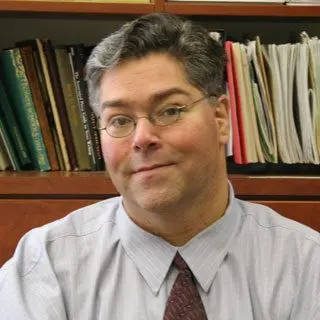
Academic dean David Colón served as our point person, and one afternoon after the smoke had cleared, he and I sat down and discussed the visit and Collegiate’s journey into the future.
What was the committee looking for?
Things like how the school’s governed, how much input we get from the community, how we get that feedback, how we make curriculum and the quality of our curriculum. They make sure this is a safe place. Student activities are monitored.
If re-accreditation is almost a done deal, why do we take it so seriously?
There’re two sides. One is the compliance part. The other is the forward-looking part. Sure, we can do “X”, but what will “Y” look like two years, five years, ten years down the road? We really try to use this as an opportunity to look ahead and learn from visiting committee members.
What did the committee particularly like?
The quality of the faculty. The engagement of the faculty with students. You hear that everywhere. It’s kind of cliché, but it’s cliché for a reason.
There’s palpable excitement. People are really interested in what they’re doing.
We’ve tried to give people the opportunity to pursue excellence in a customized way. If you’re a good athlete or artist or musician or scientist, you can pursue excellence. If you’re a teacher, for example, who really wants to delve into some aspect of literature, we encourage that with a professional development program or summer grant.
We don’t really do anything out of the ordinary when a visiting committee comes, do we?
Collegiate is a pretty darn impressive show to begin with. I’m confident enough in this institution that I want people to see us as we are.
We even had the committee members eat lunch in the cafeteria. Someone asked if we should put them in a separate room. No. I like that chaos of the lunchroom. That’s exactly how Collegiate operates. It’s not anything unseemly. It is a little loud, but that’s the acoustics. We just wanted them to see us as we are.
Did they give us any suggestions?
We’re doing some great things, but their suggestion is that we articulate those things.
You walk these halls, you go into the classrooms or onto the fields, and you see just amazing stuff going on. It seems awkward telling people about the great things we do.
There’s a sense of modesty here. We don’t want to brag about ourselves, but we probably do need to brag a little bit more.
Even though things are going well, no one ever gets complacent.
It goes back into the history of this institution. There’re so many different types of people coming together. There are people who think one way about education and people who think another way. But there’s a civil community where we can have good conversations, nothing hostile, nothing overly competitive. It’s OK not to agree on everything. We learn a lot from the conversations.
What have you learned about Collegiate in the decade you’ve been here?
Coming from Manhattan to Richmond, there was a bit of a culture shock. You learn very quickly that this is a place that really enjoys learning and isn’t afraid to question itself.
Being a teacher, department chair, administrator, and parent has really changed my perspective.
When one of your children has a teacher, you learn to appreciate the strength of that teacher. You see the teacher-student-coach interaction. Philip (Colón’s 9th grade son) is on the JV football team and has Lewis Lawson as a coach and also as an English teacher. Loves him as teacher. Loves him as a coach. Not that I didn’t appreciate Lewis before, but it’s so different when you have an emotional investment. It changes how you look at people. It’s a different level of respect.
Where will the school be in 10 years?
We’ll see a lot of external changes, of course, but what’s made Collegiate great is the perseverance of the values, the honor…I feel like I’m repeating the mission statement…the love of learning.
As we’ve changed as a school, there’s been no rethinking of the basics. It’s not fossilized. It’s a matter of who we are. Sportsmanship really matters. The honor code really matters. We don’t take those values for granted.
They’re part of the DNA of this place.