
keith evans, in his own words
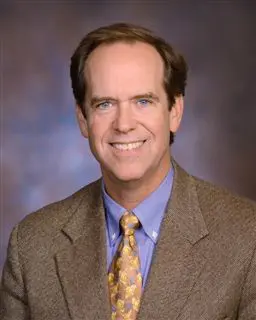
He arrived from Memphis in the summer of 1999 sporting his trademark beard and eager beyond words to begin his new job as head of Collegiate.
Keith Evans was all of 35 years old, the school was well into a period of rejuvenation and revitalization, and there was no time whatsoever for a honeymoon.
New construction, renovation of existing facilities, curriculum enhancement, development of the fine arts program, global education, service learning, and unparalleled accomplishment in the athletic arena were becoming part of our daily consciousness as the school moved at breakneck speed into the 21st Century.
Ready or not, Evans hit the ground running.
He never stopped.
He had no choice.
Who could have imagined how far we would collectively travel in the next 15 years?
On the eve of his departure to lead The Westminster Schools in Atlanta, Evans reflected on the fun times, poignant moments, and inflection points that have made his tenure at Collegiate so memorable.
He had many reminiscences and observations.
Here are a few, in his own words.
On the evolution of the Robins Campus from an undeveloped, wooded tract off Blair Road to a state-of-the-art facility for athletics.
We purchased the property, and a year later, for several different reasons, we suddenly lost access to all the remote fields we were using for practices.
We were pretty fully engaged in other construction and financial commitments and really didn’t have an immediate plan to do anything in Goochland.
Suddenly, we needed an immediate plan. It was a wide-eyed,
“what-do-we-do-now?” moment.
We needed six fields. We had the land planner go out. He looked at it, came back, and said, “If you do six fields, you’ll end up with a pile of dirt. You might as well lay out 12, use the dirt, and level the whole thing out.”
We didn’t have money for any of it, so why not go ahead and do 12 rather than six? We ended up doing 12 fields that we didn’t have the money to sod so they were basically dirt and grass seed.
That coincided with a very dry spring and summer, so those fields were hardly able to support sprouting grass. For a period of time, they also generated a lot of rocks.
There’s a generation of alums who have distinct recollections of doing rock-picking instead of detention, of having a shirt-tail untucked and having a bucket of rocks be the consequence. I bump into them all the time. They see it as a badge of honor that they were the rock pickers.
It wasn’t too long before the school had to make a decision about the future of that property and the scale and degree of investment.
There was a lot of nervousness about moving athletics out there. Ultimately, it was a decision to go all-in and make it something that would last for the ages.
What you see now had its roots in rock-pickers and dust and rocks and grass seed. These modest and fairly humble beginnings over time made a difference.
On increased global awareness and myriad travel opportunities.
Collegiate had done things internationally for a number of years, but for the most part it was Europe-oriented.
We had some folks who had been involved in Honduras. They suggested that we get involved in some service work down there, so we sent a scout team to Honduras.
They came back and said this was a great opportunity for our kids. We had some folks who thought sending kids to Honduras was crazy, just insanity.
We sent a group there, they had the time of their lives, and this Honduras thing kind of took off.
(In 2013), Brian Leipheimer (director of college guidance) and I went through Shanghai to go to one of our partner school’s tenth anniversary celebration and while there met two of our seniors (Maddie Crews and Ojel Pathak) doing internships in Shanghai for their senior project. They traveled with us to our partner school (Beijing New Oriental School in Yangzhou). They really were navigating China on their own at that point.
What was remarkable to me was the distance we traveled from being hesitant to basically hop over a little body of water to Honduras to two girls jetting off to Shanghai on their own for an internship.
On the legacies of Joanne Pratt (English) and Kevin Kelley (art), colleagues who faced cancer with courage and dignity.
There were two things that were sad and tragic but also represented what the Collegiate faculty is all about.
Joanne was just this wonderful kind of eccentric presence and teacher. She had her own opinions and was not scared to voice them.
As she was battling cancer, routinely, late in the afternoon, she would come in, plop down in the chair next to my desk, and talk about what it was like to die and the process of knowing it was going to happen.
Then, she’d get up and leave, and I’d think, “Wow! What a courageous person. What a gift to these kids to have her teaching here!”
I knew Kevin, but I felt like I got to know him better after he died by talking to his family and colleagues about the service for him.
The service out on the (McFall Hall) patio was a completely organically developed thing. We didn’t cull though the parts or try to shape them. We said, “This will be just like Kevin. Whatever it ends up being, it’ll be exactly like Kevin was.”
You embark on a project in your studio, and you don’t know what it’s going to end up being. Sure enough, it was a moving experience. There was drumming. His family and this cross section of Collegiate people were there. It was just like Kevin.
Those memories are tragic because they include faculty members dying, but both had such a profound impact in terms of what I knew to be true about our faculty.
On the historical perspective of the venerable and delightful Ann Lee Saunders Brown ’36, whose kindness, generosity, and love for the school made possible the Saunders Family Library in the Sharp Academic Commons. Inscribed in stone on the outside trim are the names of faculty from her era.
Ann Lee, from the beginning, was very focused on paying tribute to her teachers, who had basically worked through the Depression when parents were known to leave envelopes of cash to help pay their salaries.
Ann Lee wasn’t sure exactly how she wanted to honor them. She was sure she wanted to remember these faculty in a forward-looking building that would have a historical reference point.
When the idea of putting these names around the belt course came up, she immediately seized on it.
That was a wonderful moment.
On his personal and professional growth over the past 15 years.
When I came here at 35, there was kind of a brute-force model that you had to take to get the job done because there were so many pots on the stove.
You’re stepping out on the ice, wondering if it’s going to hold.
On one hand, you’re thinking, if I don’t do it myself...
On the other hand, you see a lot of gifted, talented, and energetic people around you.
Over time, I both learned and tried to get better at tapping those talents and gifts.
That’s been a phenomenal lesson for me.
On his role in the school’s evolution.
What you quickly realize is that you can’t make the school something it doesn’t want to be. You have to get a sense of what it wants to be and unlock that.
Collegiate wants to be the first adopter…a place that’s trying out new things, going to the new place, entrepreneurial.
You tap into that piece of the school’s DNA that goes back to its founding in 1915. You tap into this huge reservoir of energy that makes good things happen.
Had I tried to impose some other vision that wasn’t in concert with that, it wouldn’t have worked.
That’s the secret of school leadership. It sometimes looks like you showed up with a vision, but it’s really discovering the vision the school has for itself.
When I interviewed, it was very clear that Collegiate had an enormous amount of vision to become what it is today. It didn’t know exactly what that should look like, but it had the ambition.
That ambition was very appealing.
The school today is evidence of it. Collegiate is exactly the same school in its spirit that it was when it was founded in 1915 (by Helen Baker).
She had this idea that she’d open a school, but she couldn’t even vote. She didn’t know if anybody would even show up. That’s a pretty crazy thing to do, you know.
That mindset from 1915 has an unbroken strand to today.
It’s zig-zagged a little bit, but it’s been an unbroken strand, and it will be an unbroken strand going into the school’s future.
That’s who the school will be. That’s a great thing.