
John Bullard '77: Strummin' Classically on the Old Banjo
John Bullard has always had a wide but seemingly contradictory range of interests. All his life, the 1977 Collegiate graduate has been an avid hunter and fisherman. He was a rugged, aggressive, tough-as-nails halfback and cornerback on some of Grover Jones’ best football teams. On the track, he was a sprinter. There were faster runners, to be sure, but none competed with more intensity. He has a B.S in management economics from Hampden-Sydney and has worked in sales, construction, and commercial real estate. But he’s always had another side, an aesthetic side.
Bullard, you see, is a creative, accomplished, highly-respected banjoist. He’s versed in the music of the European masters and has earned international recognition for transcribing classical works for the five-string banjo. He’s recorded two CD’s (John Bullard – The Classical Banjo and Bach on the Banjo) which have received critical acclaim. In the music community, he’s considered a virtuoso in his road-less-traveled specialty.
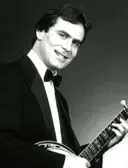
Bullard is also a long-time aficionado of bluegrass. He’s served on the faculty of the Tennessee Banjo Institute where he’s rubbed shoulders with such eminent musicians as Pete Seeger and Béla Fleck. He can pick ‘n’ grin with the best of ‘em
Last Friday, Bullard returned to his alma mater to offer, for almost an hour, a sampling of his music to a rapt Middle School audience. Later, we sat down for an enjoyable discussion of how he began, what motivates him, and how he’s found a way to translate his artistic passion into his life’s work.
So how did you get started with the banjo?
My dad played the guitar, so there was always one around the house. Then, I heard Earl Scruggs on The Beverly Hillbillies. Then Deliverance came out, and “Dueling Banjos” began popping up on the radio. When I heard that stuff, it just blew me away. The banjo was what I wanted to play.
So where’d you go from there?
One of our neighbors gave us an old banjo. My dad kind of put it back together with a few plumbing parts and nuts and bolts and got it playable. Then, my folks got me lessons with this guy Arthur Rucker. He did lessons like a paper route. He would go to people’s houses, and he taught me to play in the style of Earl Scruggs.
You’ve performed all over the country. Did you remember your initial gig?
The first thing that sticks out was when I was maybe 12 or 13 and played at a talent show in the old (Collegiate) cafeteria. That was fun because it was in front of a big crowd. Played the theme from The Beverly Hillbillies. Everybody started clapping along. I actually ended up winning. Won a cake.
When did you develop an interest in classical music?
After Hampden-Sydney, I was so consumed with the whole music thing that I went back to school at VCU. I auditioned on the guitar and was going to learn how to play the classical guitar, but a couple of teachers there suggested I try some classical stuff on the banjo because they knew it was my main interest.
That summer (1984), I went to the Galax Fiddlers Convention which was an absolute sea of every kind of music you can imagine. I ran up on this guy Fred Boyce who was playing a little classical thing on the banjo. I was like, “That’s what I’ve been working on.” We talked some, and that just sent me off.
I got so into it that with the help of some teachers at VCU, I approached the school to see if I could get a degree in banjo, but they said, “No way. Can’t do that.”
I did meet John Patykula, the head of the guitar department. We started playing together and working on this classical thing together. We’ve played together ever since.
(Three years ago, at Patykula’s urging and with a much more impressive résumé than he had two decades earlier, Bullard resumed his studies at VCU and in December became the first musician to earn a performance degree in classical banjo.)
What is it about playing classical music on the banjo that turns you on?
You know, it’s weird, but I just love classical music which I didn’t know until I went to VCU the first time. I had never been exposed to it that much, particularly the music of the Renaissance and Baroque periods. I’m real attracted to that sound, that plucky sound of the lute and harpsichord. It’s very similar to the sound of the banjo.
To me, classical music is art music. It’s hard to articulate, but it’s much more of a poetic thing than, say, ripping out “Foggy Mountain Breakdown.” With the classical music, you can play, say, a Bach piece that was written for solo violin, and you can really be self-expressive. There’s a lot of what in music school is called interpretation. In bluegrass, you kind of hammer it out, which is a blast, but there’s not much artistic expression.
What is it about adapting classical music for the banjo?
Several things. One, it’s detective work. You have to scour through lots of music to find something that will really work. Then, it’s the academic exercise. It’s fun to take something written for another instrument in a particular key and figure out what key it will work in on the banjo. Finally, it’s seeing and hearing the final product. The process is very rewarding. It’s really kind of a craft, and I enjoy the craft of it all.
When you performed at Collegiate recently, you appeared – please forgive the sports reference – in a zone.
I’ve actually discovered that music is 100 percent parallel to athletics. You practice. You do drills and technique work. You do it when you don’t want to do it. You decide you’re going to do it, stick to it, and persevere. You do your preparation. Now it’s time to get lost in the effort and let it happen. You play your best when you’re totally absorbed in your music.
What kind of music did you enjoy when you were growing up?
I certainly listened to the Beatles a ton, and Motown, and rock and roll, but when I was at Collegiate, I was really into bluegrass.
What stations are programmed into your car radio now?
I don’t really listen to the radio. I listen to CD’s, mostly, that have what I want – bluegrass or classical. I can’t get enough of Bach. I’ll listen to one piece that I’m working on and try to get as many recordings of somebody playing that piece as I can.
What can you tell students at Collegiate, not so much about playing the banjo but about following their dreams?
It really goes back to what I learned on the football field and track. It’s your heart. It’s about finding your true self but backing that up with a lot of hard work and discipline.
How can a guy who never minded sweating, never minded getting dirty, do something so aesthetic?
I’m a combination of my parents. My dad was a rough-and-tumble hunter and fisherman. My mom was an artist. I’ve always had an artistic side. There’s really no dichotomy at all. It’s just who I am.