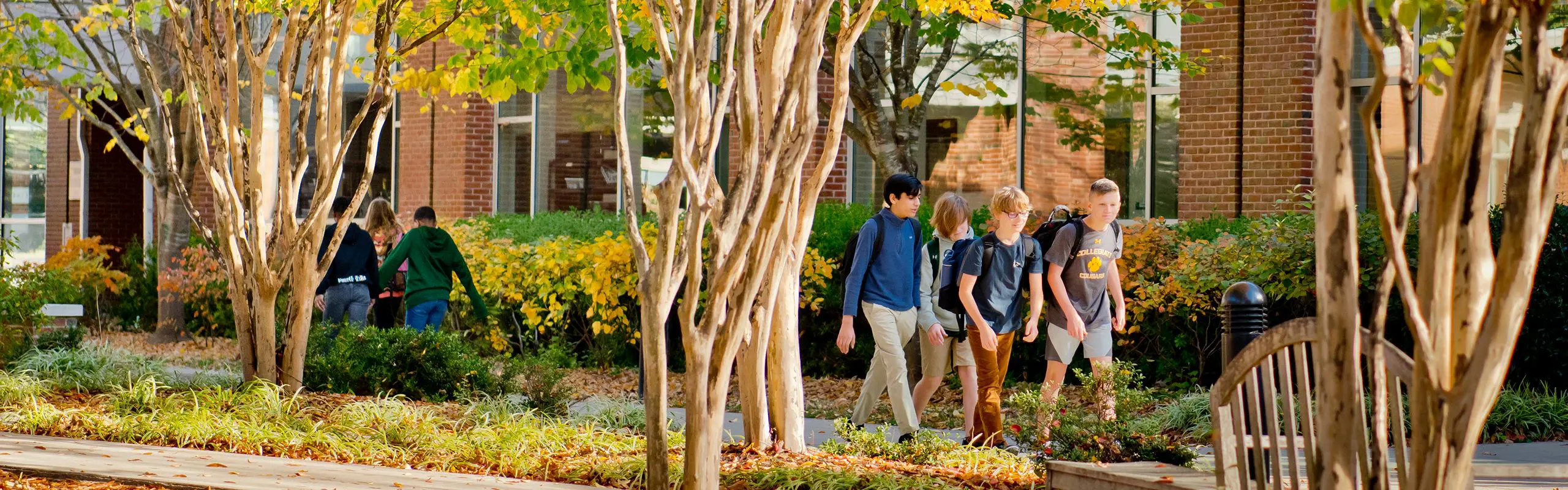

colonial day: 3rd graders bring history to life
“Good day!” said the self-possessed lad of 9 with all the earnestness and gusto he could muster. “My name is William Prentis. I am a merchant in Williamsburg, the grand capital of Virginia. I am of the middling sort because I work with my hands. I was born on October 10, 1699. My family moved to Williamsburg in 1715 when I was 16 years of age. My father was a merchant, and I learned the trade by helping in his shop.”
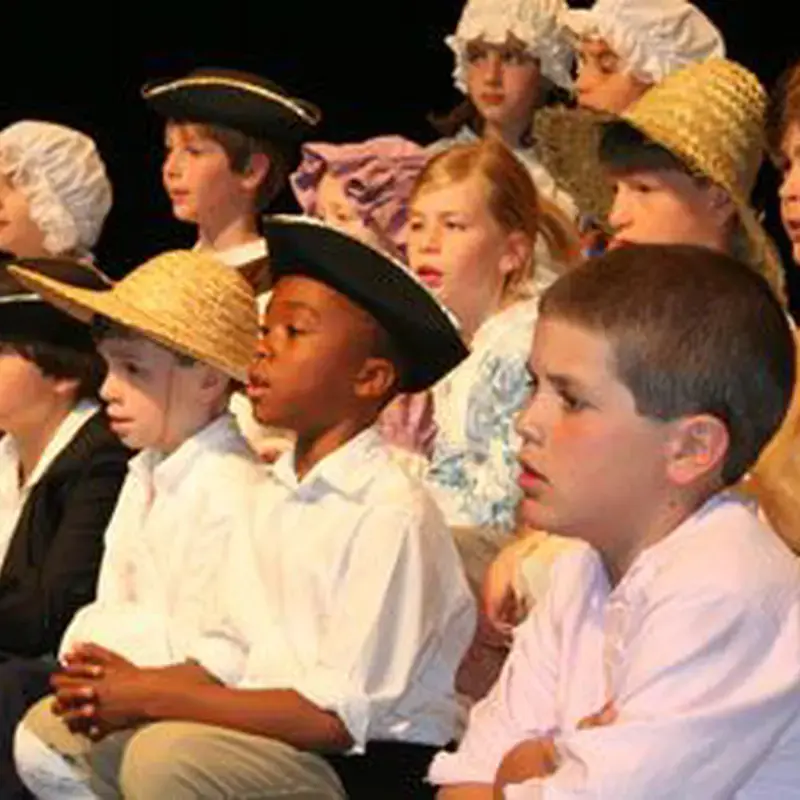
So begins a presentation – one of 110, actually – that highlighted the 2008 renewal of Colonial Day, a living-history production that was staged this morning by the five classes of Collegiate third graders, all clad in period clothing.
By the time the young man portraying Prentis had finished his two-minute rendering, the visitor knew the ins and outs of the shop owner’s role in his community.
“The children really take on the persona of their character,” said Lanessa West, who teaches third grade. “They get excited about the entire process: doing the research, choosing their costume, and creating their display board.”
Colonial Day is the culminating activity of the Virginia history curriculum in Grade 3. In the classroom and on field trips to Jamestown, Williamsburg, and Yorktown, students learn of Native American culture, continue through the establishment of the first permanent English settlement, and finish with the Revolutionary War.
Today’s learn-by-doing experience, guided by grade-level and special teachers, consolidated their understanding of Colonial America and brought the era to life. The re-enactors, who gleaned the information for their characterizations from primary sources, represented the range of Colonial society.
Among them was Lord Dunmore, the last royal governor of the Virginia colony. There was Andrew Thompson, an indentured servant. There were tradesmen: a blacksmith (James Anderson), gunsmith (John Brush), wigmaker (Jane Charlton), and milliner (Margaret Hunter). There was Lydia Broadnax, a cook for George Wythe, and Jane Vobe, who assumed ownership of the King’s Arms Tavern after her husband died.
“The fact that the children have one specific area to master encourages them to want to learn more,” said Susan Morris, also a third grade teacher. “Many have gone back to Williamsburg with their families for further exploration.”
After the presentations, the show moved to the Estes Multi-Purpose Room for a program of music, dance, and recreational activities from Colonial times. Finally, families convened in the courtyard to enjoy a picnic lunch and a display of student-created, period art that included tin punch lanterns and woven bookmarks.
Each year, students leave Colonial Day with a perception of life in early America that they would never have learned just from textbooks.
They understand how the colonists lived, worked, dressed, interacted, and relied on one another.
They understand their sacrifices and contributions that enabled our democratic society to begin.
They see the unfairness caused by the delineation among the social classes.
“The group production teaches valuable information related to the three social classes: gentry, ‘middling sort,’ and ‘lesser sort,’” said third grade teacher Emily Oney. “The children don’t like the way the slaves and indentured servants were treated, yet they’re willing to study these characters and represent them.”
The third graders also learn about education, leisure activities, worship, government, and communication in Colonial America. Finally, they learn that by working together, studying, and preparing, they can create memories that they will take with them long after they leave the Lower School.
“The Colonial Day program is a wonderful way for the children to learn,” Oney continued. “Their knowledge is far deeper than if they just listened to one of us tell them about Colonial times.”